


The 5 Lies Packaging Owners Tell Themselves About Sales By David Marinac
The 5 Lies Packaging Owners Tell Themselves About Sales (And Why Revenue Is Flat)
It's January 2026. You're staring at another year of flat revenue. And you're about to do the exact same things that didn't work in 2025, 2024, or 2023.
It's January 2026.
You're staring at another year of flat revenue.
And you're about to do the exact same things that didn't work in 2025, 2024, or 2023.
I'm going to show you the five lies packaging owners tell themselves about sales—and why those lies are quietly killing your growth.
If your revenue has been stuck for the last 18–24 months, this article is for you.
Fair warning: This is going to sting.
But it's the beginning of 2026.
This is a once-in-a-generation opportunity to do something radically different while your competitors keep doing the same shit that's been failing them for years.
The companies that figure this out in the next 6–12 months will club their competition to death.
The ones that don't will spend another year wondering why the phone isn't ringing.
You're Not Lazy But You're Believing Things That Aren't True Anymore
Look, you're not lazy. You're not stupid. And your team isn't incompetent.
But somewhere along the way, you started believing a few things about sales that used to be true and now they're quietly killing your growth.
I've spent years working with packaging manufacturers, contract packagers, and fulfillment operations.
I've heard the same five statements over and over again from smart, experienced owners who are frustrated that their sales aren't moving.
These aren't just excuses.
They're lies we tell ourselves to avoid confronting a harder truth:
The way buyers find, evaluate, and choose packaging suppliers has fundamentally changed.
And most packaging companies are still operating like it's 2015.
Here's what makes this moment different:
We're at the beginning of 2026.
Your competitors are about to waste another year doing the same things that didn't work.
You don't have to be one of them.
Let's walk through the five lies.
Lie #1: "Our Reps Know Our Customers We're Relationship-Based"
Why it feels true:
Your best accounts are relationship-based.
You've had some of them for 10, 15, even 20 years.
Your reps know the plant managers, the buyers, the decision-makers. They play golf together. They text on weekends.
The reality:
Those relationships are legacy assets, not a growth engine.
Here's what's actually happening behind the scenes:
1. Your best relationships are aging out.
Buyers retire, get promoted, or leave for competitors.
The new person doesn't know your rep and doesn't care about the golf outings.
2. Your reps spend 60–70% of their time servicing existing accounts, not prospecting.
That's not their fault it's how the job works when you're "relationship-based."
3. Meanwhile, new buyers at companies you've never heard of are searching for packaging suppliers right now.
And they're not calling you.
They're asking ChatGPT, Perplexity, Claude.
And you're invisible.

The fix:
Stop pretending relationships alone will carry you forward.
Relationships are great for retention but they don't scale, and they don't replace themselves.
You need a system that attracts new relationships while your reps maintain the old ones.
That's where AI-driven visibility comes in: you become findable and trustworthy to buyers who don't know you yet.
The opportunity:
It's the beginning of 2026. Your competitors are still relying on relationships that are dying.
You can be the one who shows up when their buyers start searching.
Lie #2: "We Just Need Better Hunters"
Why it feels true:
Your current reps aren't bringing in enough new business.
So the obvious answer is: hire a "hunter" someone aggressive, someone who can cold call, knock on doors, and close deals.
The reality:
Hiring "better hunters" is expensive, slow, and almost always disappointing.
Here's why:
1. A good sales rep costs $85K–$120K+ per year.
Salary, benefits, car, expenses.
You're paying them to prospect, quote, follow up, and close.
But 60–70% of their time is spent on low-value activities:
Chasing dead quotes
Answering the same questions over and over
Trying to get past gatekeepers
2. Even great hunters struggle in packaging.
Because buyers have already done their research before they ever talk to a rep.
By the time your "hunter" gets on the phone, the buyer has already narrowed it down to 2–3 suppliers.
If you're not on that list, you've already lost.
3. Turnover is brutal.
You spend 6–9 months training a new hunter, and if they don't hit quota, they leave.
Then you start over.
You just burned $120K and 9 months for nothing.

The fix:
Stop asking your reps to be prospectors, marketers, and closers all at once.
Instead, use AI and automation to do the prospecting and education work:
✅ Identify and qualify the right targets
✅ Warm them up with relevant, specific content
✅ Deliver sales-ready leads to your reps so they can focus on closing, not cold calling
Your reps should be closers working educated prospects, not hunters banging their heads against a wall.
The opportunity:
It's the beginning of 2026. Your competitors are about to burn another $120K on a sales rep who'll fail in 6 months.
You can build a system that does the grunt work and lets your reps actually sell.
Lie #3: "Our Market Is Different; That AI Stuff Won't Work Here"
Why it feels true:
Packaging is a "relationship business." It's technical. It's hands-on.
Buyers need to see samples, tour facilities, talk to engineers.
AI is for tech companies and e-commerce brands not for packaging.
The reality:
Your market isn't different. Your buyers have changed.
Here's what's happening:
70–80% of B2B buyers now start their search with AI-powered tools.
ChatGPT. Perplexity. Claude. Google's AI Overviews.
They're asking detailed questions like:
"Who can handle subscription kitting in the Midwest?"
"What's the cost difference between flexo and digital printing for short runs?"
"Who are the top contract packagers for food and beverage with hot-fill capability?"
If your company isn't showing up in those AI-driven results, you don't exist to that buyer.
Your competitors some of whom aren't even as good as you are winning business simply because they're more visible to AI search.

The fix:
Stop thinking of AI as "techy" or "not for us."
AI isn't about robots or science projects.
It's about being findable and recommendable when your ideal buyers are searching.
That means:
✅ Publishing specific, useful content that answers the questions buyers are already asking
✅ Optimizing your digital presence so AI tools can find, understand, and recommend you
✅ Using AI agents to quietly educate and warm up prospects before your sales team ever talks to them
You don't need to become a tech company. You just need to stop being invisible.
The opportunity:
It's the beginning of 2026. AI search is now 90–95% of B2B buyer research.
Your competitors think "AI stuff won't work here."
You can dominate the search results while they're still waiting for the phone to ring.
This is a once-in-a-generation moment to become the default answer when buyers ask AI for recommendations.
Lie #4: "If Buyers Want Us, They'll Call"
Why it feels true:
You've been in business for 20, 30, 40+ years.
You have a good reputation. You've done great work.
If someone needs what you do, they'll find you.
The reality:
No, they won't.
Here's why:
1. Buyers don't "find" suppliers anymore—they search for them.
And if you're not showing up in that search (Google, LinkedIn, AI tools), you don't exist.
2. Even if a buyer has heard of you, they're comparing you to 3–5 other options before they ever reach out.
If your competitors have better content, clearer messaging, or stronger online presence, you lose before the conversation even starts.
3. "If they want us, they'll call" is another way of saying, "We're waiting for the phone to ring."
That's not a sales strategy that's hope.
The fix:
Stop waiting for buyers to find you. Make yourself findable.
That means:
✅ Being visible where buyers are searching (Google, AI search, LinkedIn, industry groups)
✅ Publishing content that positions you as the expert in your niche
✅ Using automation to stay top-of-mind with prospects who aren't ready to buy today but will be in 3–6 months
The companies that win in 2026 and beyond aren't the ones waiting for the phone to ring.
They're the ones who show up first, educate the buyer, and make the decision easy.
The opportunity:
It's the beginning of 2026. Your competitors are still sitting by the phone.
You can be everywhere your buyers are looking—before they even know your competitors exist.
Lie #5: "Marketing Doesn't Work in Packaging"
Why it feels true:
You've tried marketing before.
You spent money on a new website, ran some Google Ads, maybe even hired an agency.
It didn't work.
You got a few leads, but they were junk tire-kickers, price-shoppers, or people looking for something you don't even do.
So you concluded: "Marketing doesn't work in packaging."
The reality:
Bad marketing doesn't work in packaging. But that's true in every industry.
Here's what actually happened:
1. You hired a generic marketing agency that didn't understand packaging.
They built you a pretty website with vague messaging like "custom packaging solutions" and "quality you can trust."
That doesn't mean anything to a buyer.
2. You ran Google Ads that sent traffic to a homepage with 10 different calls to action.
Confused visitors left. You paid for clicks that went nowhere.
3. You didn't have a system to capture, educate, and nurture leads over time.
So the few good leads that came in got lost in the noise.
The fix:
Stop thinking of marketing as "ads and websites."
Real marketing in packaging is about:
✅ Clarity: Being specific about what you do, who you do it for, and why you're different
✅ Visibility: Showing up where your ideal buyers are searching (Google, AI search, LinkedIn)
✅ Education: Answering the questions buyers have before they talk to a sales rep
✅ Systems: Using automation and AI to capture, qualify, and warm up leads so your sales team only talks to people who are ready
When done right, marketing becomes a predictable sales engine not a cost center.
The opportunity:
It's the beginning of 2026. Your competitors just concluded "marketing doesn't work" and gave up.
You can build a system that attracts, educates, and converts buyers while your competitors sit in the dark.
The Hard Truth (And the Once-in-a-Generation Opportunity)
If your revenue is flat, it's not because your product is bad or your team is lazy.
It's because the way buyers find, evaluate, and choose packaging suppliers has changed and you're still operating like it's 2015.
But here's what makes right now different:
It's the beginning of 2026.
Most of your competitors are about to spend another year doing the exact same things that didn't work in 2025, 2024, or 2023:
Hiring sales reps who'll fail in 6 months
Waiting for relationships to magically replace themselves
Hoping the phone will ring
Telling themselves "AI stuff won't work here"
Concluding "marketing doesn't work in packaging"
This is your moment.
This is a once-in-a-generation opportunity to do something radically different while your competitors keep sleepwalking.
The good news?
You don't need to become a tech company or hire a massive marketing team.
You just need to:
Get visible where buyers are searching (AI search, LinkedIn)
Get specific about what you do and who you do it for
Get systematic about attracting, educating, and converting the right buyers
The companies that figure this out in the next 6–12 months will club their competition to death.
The ones that don't will keep telling themselves the same five lies—and wondering why revenue is still flat.

Which Lie Are You Still Telling Yourself?
It's January 2026.
You have a choice:
Option 1:
Keep doing what you've been doing.
Hope this is the year it magically works.
Watch your competitors slowly eat your lunch.
Option 2:
Recognize that the game has changed.
Build a system that makes you findable, trustworthy, and top-of-mind when buyers are searching.
Dominate while your competitors are still figuring out what happened.
The market doesn't wait for the slow.
And 2026 won't give you a second chance.
What To Do Next
If you're ready to stop waiting for the phone to ring and start building a real sales engine...
If you're ready to take advantage of this once-in-a-generation moment while your competitors keep telling themselves the same lies...
Here's what to do:
Step 1: Watch the Full Video
I break down all five lies in detail in this video:
Step 2: Read the LinkedIn Article
Step 3: Get Your Visibility Blueprint
Step 4: Connect on LinkedIn
DM me and let's talk about what a simple, no-jargon version of a better sales system could look like for your plant.
Because the companies that act now will own their markets by Q3.
The ones that wait will spend another year wondering what happened.
Which one are you going to be?
Related Articles:

Want to discuss
custom packaging?
Want to create your own Specialized packaging Department?

But Don't take it from me take it from my students

HRH Princess Francisca Harakawa (Amasu Omawa III)
"In today’s society, there are few scholars whose wisdom transcends age, gender, ethnicity, occupation and status. Sir Jonathan is one such scholar. He has guided me through many challenges over the years and has done the same for many others around the world. He is one of only a handful of people whom I trust and can turn to for guidance, and I am truly grateful to know him as a friend and teacher."
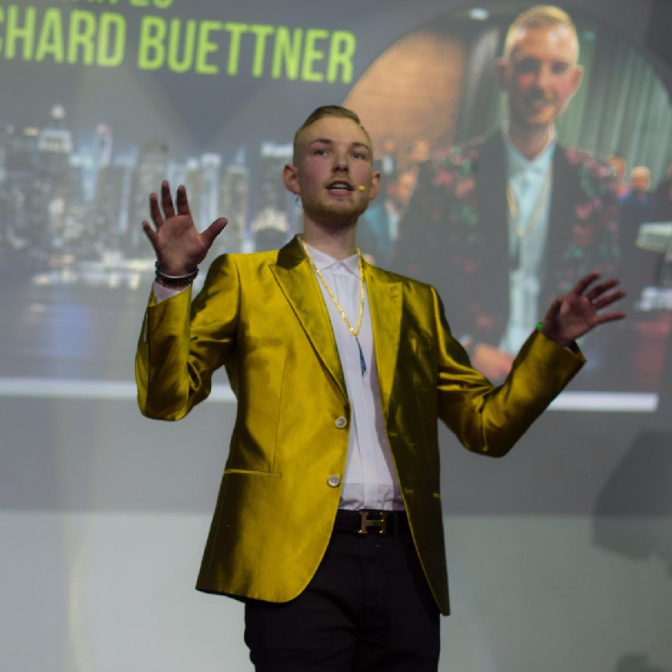
Richard Buettner
"As Grand Master of the Sovereign Order of St. John of Jerusalem Knights of Malta, it has been my mission to uphold our knightly tradition of promoting excellence, decency and altruism throughout the world. Sir Jonathan Amaret is one such individual who exemplifies this tradition with his tireless efforts to improve the lives of others through the school of Thought Mechanics and we are pleased with his induction into our order."

HIRH Prince Basilio Cali
"As Grand Master of the Sovereign Order of St. John of Jerusalem Knights of Malta, it has been my mission to uphold our knightly tradition of promoting excellence, decency and altruism throughout the world. Sir Jonathan Amaret is one such individual who exemplifies this tradition with his tireless efforts to improve the lives of others through the school of Thought Mechanics and we are pleased with his induction into our order."
HRH Princess Francisca Harakawa (Amasu Omawa III)
"In today’s society, there are few scholars whose wisdom transcends age, gender, ethnicity, occupation and status. Sir Jonathan is one such scholar. He has guided me through many challenges over the years and has done the same for many others around the world. He is one of only a handful of people whom I trust and can turn to for guidance, and I am truly grateful to know him as a friend and teacher."
Richard Buettner
"I’m so happy to have met Jonathan at that time when I was €5000 in debt about 2 years and 4 months ago.He helped me clear my mind to focus on what I want, blocking out my doubts and helping my to control my fears.I went on to use these techniques to achieve my first success. Got personally mentored by him right before I hit 6 figures. And continued to follow his guidance and teachings when I broke through to multiple 6 figures because it enabled me to hit a 7 figure income this year and use that knowledge to help hundreds of people to achieve the same level of success. Most importantly Jonathan helped me balance out between the good & bad to get exactly where I wanted to go. Thank you Jonathan for everything that you do for the countless people on this planet."