


Are Packaging CEOs Aware of What Happened at the End of 2025
Are Packaging CEOs Aware of What Happened at the End of 2025
Something happened at the tail end of 2025.
Most packaging CEOs missed it completely.
"The question every packaging CEO must answer: Are you aware of what just got exposed?"
They were busy with Q4 scrambles and holiday slowdowns, telling themselves things would pick up in January.
But while they weren’t paying attention, the ground shifted beneath them.
AI crossed a threshold.
Buyer behavior changed permanently.
And every weakness in the old packaging sales model, weaknesses that companies had been getting away with for decades, got exposed. All at once.
It’s January 2026, and I don’t think most packaging CEOs have a clue what just happened.
I’m David Marinac. I’ve been in the packaging industry for 35 years. I’ve watched recessions, consolidations, technological shifts, and market disruptions.
This is different.
In the next 15 minutes, I’m going to walk you through the 11 weaknesses that just got exposed and why, every day you wait to address them, the gap between you and your competitors widens.
This isn’t theory. This is not a prediction.
This has already happened.
Let’s go.
PART ONE: What Actually Happened?
Here’s what changed at the end of 2025:
Buyers stopped searching the way they used to.
They stopped Googling “packaging suppliers near me.”
Now, they’re asking AI:
“Who are the best contract packaging companies for nutraceuticals in the Midwest?”
“Show me flexible packaging suppliers with FDA compliance and less than a 4-week lead time.”
“Find pharmaceutical packaging companies with ISO 15378 certification.”
And AI is answering them.
Without ever mentioning your company.
How AI Search Broke Everything
For 25 years, you could game Google.
Google rewarded three things: keywords, backlinks, and ad spend.
You could have a mediocre website and still show up if you paid enough or hired the right SEO agency to game the algorithm.
AI doesn’t work that way.
AI rewards completely different things:
Trust (Can I verify this company is legitimate?)
Specificity (Do they actually solve this exact problem?)
Depth (Is there enough detailed information to recommend them?)
Proof (Have they done this before with verifiable results?)
When AI looks at your website, it asks one question:
“Do I trust this company enough to recommend them to a buyer?”
For 99% of packaging companies, the answer is no.
And that’s the shift.
Buyers aren’t calling you anymore because AI never put you on the short list.
PART TWO: The Great Exposure
The shift to AI search didn’t just change how buyers find suppliers.
It exposed every weakness the packaging industry has been hiding for 25 years. All at once.
Like turning on the lights in a room you thought was clean and realizing it’s a disaster.
I’m going to walk you through 11 things that just got exposed.
And I want you to ask yourself as we go through this list:
Is this happening at my company?
Because if it is, you are bleeding opportunities every single day, and you don’t even know it.
WEAKNESS #1: Generic Websites
For decades, packaging companies have hidden behind vanilla websites:
“We sell packaging.”
“Custom solutions for your needs.”
“Quality and service since 1987.”
Nobody said what they actually did.
Nobody shared their specialties.
Nobody published case studies, pricing guidance, or detailed capability information.
Why?
Paranoia.
“If we tell people we’re good at X, competitors will copy us.”
“If we publish our capabilities, we’ll get price-shopped.”
“If we share too much detail, we’ll lose our competitive advantage.”
That paranoia worked when buyers had no choice but to call you and ask. When sales was about relationships and Rolodexes of who you knew.
That was then.
Now AI reads your generic website, finds nothing specific, and says:
“I can’t recommend this company. I don’t know what they do.”
The paranoia made you invisible.
And invisible is now fatal.
When a buyer asks AI for packaging suppliers, you’re not in the answer.
Not because you’re not good enough.
Because AI has no idea what you actually do.
WEAKNESS #2: Old-Boy-Network Selling
“It’s all about relationships.”
“I’ve got a Rolodex that’ll make your head spin.”
“People buy from people they trust.”
And that’s true. People do buy from people they trust.
But here’s what’s changed:
They build the short list of people before they call anyone.
They ask AI. They research online. They form opinions about who’s credible and who’s not before a single relationship enters the picture.
If you’re not on the short list, your relationships don’t matter.
Nobody is calling.
The old boys who spent 25 years building networks are watching those networks dry up.
Not because their relationships went bad.
Because the way buyers start the process has changed.
They used to call you first and say, “Hey, I need packaging. Who do you recommend?”
Now they ask ChatGPT.
And if you’re not in ChatGPT’s answer, you don’t exist.
The Rolodex is dead. Long live the algorithm.
WEAKNESS #3: Lazy and Outdated Business Development People
They have been exposed.
Let me tell you a story.
Last week, I reached out to a business development manager at a packaging company. Nice guy. Been in the industry for 20+ years. Works the trade shows. Has the connections.
I offered to show him for free why buyers could not find his company online.
His response?
“I’m good. Not interested.”
So I ran the AI visibility report anyway.
His company’s AI Trust Signal score?
58%.
Failing. Like, really failing.
When buyers ask AI for suppliers in his space, his company doesn’t exist in the results.
Here’s the business development manager. His literal job title is to develop business.
And he just declined to even learn why buyers can’t find him.
This is not one person.
This is 95% of the packaging industry.
Business development managers who:
Haven’t learned anything new in a decade
Decline calls offering competitive intelligence
Post Pack Expo photos on LinkedIn and call it a strategy
Tell ownership “things are picking up” while the company bleeds opportunities they never knew existed
Think “doing more trade shows” is the answer
They’re not lazy because they don’t work hard.
They’re lazy because they stopped being curious.
They stopped learning. They stopped adapting.
And now the gap between what they know and what they need to know is a canyon.
One they have no interest in crossing.
WEAKNESS #4: Fat and Happy Distributor Contracts
For years, packaging manufacturers could lean on distributor relationships:
“We don’t need to market. We’ve got Veritiv. We’ve got Imperial Dade. We’ve got a network.”
“Our distributor handles all that.”
“We’re their preferred supplier.”
Those contracts are ending. Or being squeezed. Or delivering a fraction of what they used to.
Why?
Because the distributors are facing the same shift.
Their customers, your end users, are researching online before calling anyone.
They’re asking AI for recommendations.
They’re bypassing the distributor entirely and going directly to manufacturers who show up in search.
The fat and happy days are over.
If you can’t be found directly, you’re depending on a middleman who’s losing their own visibility.
That’s not a strategy. That’s a prayer.
And prayers don’t pay the bills.
WEAKNESS #5: Order-Taker Salespeople
Somewhere along the way, packaging manufacturers stopped hiring hunters and started keeping order takers.
Salespeople who:
Wait for the phone to ring
Process incoming requests
Quote whatever lands on their desk without questioning whether it’s the right business
Have no prospecting discipline
Can’t articulate value beyond price
Don’t understand the buyer’s actual problem
They’re not selling. They’re administering.
What happens when the phone stops ringing?
When buyers are getting their short list from AI, and your company isn’t on it?
The order taker has nothing to take.
You’re paying $85,000 a year plus benefits for someone who can’t create an opportunity, only process one.
And opportunities just stopped arriving because buyers aren’t calling anymore.
They’re asking AI.
So your order taker sits there waiting for the phone to ring, that’s never going to ring.
And you wonder why sales are down.

"When buyers ask AI for packaging suppliers, 99% of companies don't appear in the results"
AI Search Rewards Specifics Not Generic Information
WEAKNESS #6: Cheap Packaging of Zero Value to Boost Revenue
When you can’t win on specialization, you compete on price.
When you can’t be found for what makes you unique, you chase commodity work.
When visibility fails, volume becomes the strategy.
So packaging companies started selling cheap, taking any order, and racing to the bottom.
“At least it’s revenue,” they thought.
“At least we’re keeping the machines running.”
“At least we’re covering overhead.”
Except it’s not. Not really.
It’s margin destruction.
Its capacity consumed by work that doesn’t pay the bills.
It’s the slow bleed that feels like survival, but it’s actually suffocation.
The Trap
The companies that sold cheap to fill capacity are now trapped.
They can’t raise prices without losing volume
They can’t invest in marketing because margins are gone
They can’t hire better salespeople because there’s no money
They’re stuck in a race to zero that they entered voluntarily
And every day they stay in that race, the hole gets deeper.
WEAKNESS #7: Expensive Trade Shows That Generate Nothing
Pack Expo. Supply Side West. IPEX. Whatever.
$25,000 to $50,000 per show.
Booth design and rental. Shipping. Travel. Hotels. Dinners. Materials. Giveaways. Lost productivity for the week your team is gone.
Qualified opportunities generated? 0 to 2.
Everyone knows this. Nobody says it out loud.
The decision-makers stopped coming years ago. They send their junior teams. They check the recap email. They don’t walk aisles hoping to find a vendor.
But packaging companies keep going.
Why?
Because it’s what they’ve always done
Because the business development manager enjoys the trip
Because it feels like sales activity
Because “everyone else is there.”
Because ownership doesn’t know what else to do
The math does not work.
The ROI was always horrible. Now it’s indefensible.
And companies are starting to notice that $40,000 in Pack Expo spend produced nothing but LinkedIn photos and a hangover.
WEAKNESS #8: Waiting for the Phone to Ring
There was a time when packaging manufacturers could sit back and wait.
Referrals came in. Repeat orders kept the lights on. The occasional trade show produced a lead or two.
The phone rang.
That time is over.
The phone stopped ringing because buyers stop calling anyone who isn’t already on their AI short list.
And the short list is built by AI based on who is visible, trustworthy, and has the specific content they need.
If you’re waiting for the phone to ring, you’re waiting for a world that no longer exists.
The phone is not broken.
The mechanism that made it ring is.
Buyers changed. The process changed. The world changed.
And you’re sitting there wondering why nobody calls anymore.

"The seismic shift at the end of 2025 exposed every weakness packaging companies had been hiding for decades"
11 Weaknesses of Packaging Manufacturers Exposed
WEAKNESS #9: Quoting Everything That Moves
High quote volume. Low close rate. Endless activity. Zero results.
This is the state of packaging sales in 2026.
Companies are drowning in quotes while starving for real sales.
Why?
Because when you’re invisible to qualified buyers, you take whatever scraps fall on the floor.
Unqualified leads. Price shoppers. Tire kickers. People who are never going to buy from you but need three quotes for their spreadsheet.
RFPs you have no chance of winning, but quote anyway, “just in case.”
The Time Waste
Your sales team spends 60–70% of their time quoting and prospecting.
Quoting work that won’t close
Prospecting leads that won’t convert
Chasing opportunities that were never real
You’re paying closing salaries for administrative work.
And then wondering why your close rate is 3%.
WEAKNESS #10: Zero Competitive Intelligence
Ask the average packaging company:
“What are your competitors doing online?”
“What content are they publishing?”
“Where are they showing up in AI search?”
“What keywords are they ranking for?”
“What’s their AI Trust Score?”
They have no idea.
Zero competitive intelligence. Zero awareness of the battlefield. Zero strategy beyond “hope to get some orders.”
In what other business would this be acceptable?
Imagine:
A football team that never watches film of its opponent
A military unit that never studied the enemy’s position
A retailer that never shopped their competition
A restaurant that never ate at competing establishments
That’s the packaging industry.
Flying blind. And proud of it.
“We just focus on what we do best.”
Great. While your competitor is eating your lunch, and you don’t even know it.
WEAKNESS #11: Zero Desire for Excellence Mediocrity is Rewarded
This is the one that keeps me up at night.
When did the packaging industry decide mediocre was good enough?
When did “we’ve always done it this way” become an acceptable answer to why we aren’t growing?
When did we stop demanding excellence from:
Our websites
Our content
Our salespeople
Our business development teams
Our marketing
Our strategy
Our leadership
Mediocrity is now the standard. And it’s being rewarded.
The business development manager who posts Pack Expo photos gets a pat on the back
The salesperson who quotes 40 jobs and closes two is “working hard.”
The company with a generic website that says nothing gets a shrug
The CEO who blames the economy instead of looking in the mirror gets sympathy
Nobody asks hard questions. Nobody measures real results. Nobody demands better.
And then everyone wonders why sales are down.
PART THREE: The Question Every Packaging CEO Needs to Answer
Are you aware that all of this just got exposed?
That AI search didn’t just change marketing; it put a spotlight on every weakness your company has been hiding.
That buyers have a new way of finding suppliers, and you’re not in the answer.
That your competitors, even the ones you think you’re better than, might be figuring this out before you do.
That every day you wait, the gap gets wider.
Are you aware?
Or are you still telling yourself:
It’s the tariffs
It’s the economy
It’s the holidays
It’s the season
It’s the market
It’s winter
It’s the weather
It’s the new administration
It’s supply chain issues
It’s labor shortages
It’s none of those things.
Buyers changed how they search.
And your company is invisible.
PART FOUR: What Happens Now?
I’ve been in this business for 35 years.
I’ve watched this industry evolve, resist, adapt, and survive.
I’ve seen recessions, consolidations, technological shifts, and market disruptions.
What happened in late 2025 is different.
This isn’t a market cycle.
This isn’t a recession. This isn’t tariffs or politics or supply chain disruption.
This is a permanent shift in how buyers find and choose suppliers.
And every company in packaging will either adapt or disappear.
The Companies That Adapt Will:
✅ Replace generic websites with specific trust-building content that AI can understand and recommend
✅ Replace old-boy selling with AI visibility and educated inbound lead generation
✅ Replace lazy business development managers with systems that actually generate opportunities
✅ Replace distributor dependence with direct-to-buyer relationships and visibility
✅ Replace order takers with closers who work qualified leads
✅ Replace margin-killing commodity work with specialized high-value positioning
✅ Replace expensive trade show theater with measurable lead generation
✅ Replace waiting for the phone to ring with showing up where buyers actually search
✅ Replace high-volume quoting with qualified opportunities that actually have a chance to close
✅ Replace ignorance of competitors with aggressive competitive intelligence
✅ Replace mediocrity with relentless pursuit of excellence
The Companies That Don’t Adapt?
They’ll be case studies in how this industry collapsed.
Cautionary tales told at future conferences about “what happens when you ignore the shift.”
Acquisition targets bought for pennies on the dollar by competitors who figured it out.
The Choice is Yours
It’s the end of January 2026.
The excuses are gone. The holidays are over. The new year is here.
Are you going to acknowledge what just happened?
Or are you going to spend another year pretending everything is fine while your company slowly becomes invisible?
The seismic shift has already occurred.
The ground has already moved.
The only question is whether you’re going to stand there and sink—or start building on the new foundation.
Your competitors are making that choice right now.
What’s yours?
Find Out Where You Stand
I’ve created a free AI Visibility Assessment for packaging manufacturers.
I’ll show you exactly:
How visible (or invisible) your company is when buyers search
What your AI Trust Score actually is
Where you’re showing up and where you’re not
What your competitors are doing that you’re not
The specific gaps that are costing you opportunities
No sales pitch. No obligation. Just data.
Request it here:
📧 dmarinac@davidmarinac.com
📞 216-373-1005
🌐 DavidMarinac.com
Download the Free Guide
“The 11 Weaknesses AI Just Exposed in Your Packaging Sales Model (And How to Fix Them)”
A detailed breakdown of each weakness with specific action steps you can take this week.
[Download at DavidMarinac.com]
About David Marinac
David Marinac has 35 years of experience in the packaging industry. He’s the founder of ABC Packaging Direct and creator of the Competitive Edge Packaging Machine —an AI-driven system that makes packaging manufacturers findable, trustworthy, and profitable in the modern buyer’s journey.
He’s worked with contract packagers, flexible packaging manufacturers, pharmaceutical packaging companies, and specialty converters across North America.
His mission: Help packaging companies adapt to the AI search revolution before their competitors do.
Connect:
🌐 DavidMarinac.com
📧 dmarinac@davidmarinac.com
📞 216-373-1005
💼 LinkedIn: [David Marinac]
One More Thing
If this article helped you see something you weren’t seeing before, please share it with other packaging CEOs who need to hear this.
Forward it. Post it. Send it to your leadership team.
Let’s start fixing this industry before it’s too late.
Because the shift has already happened.
The only question is whether you’re going to acknowledge it.
Subscribe to get future articles on AI visibility, packaging sales transformation, and what’s actually working in 2026.
Comments
What weakness hit closest to home for you? Are you seeing this at your company? Let’s talk about it in the comments.

Want to discuss
custom packaging?
Want to create your own Specialized packaging Department?

But Don't take it from me take it from my students

HRH Princess Francisca Harakawa (Amasu Omawa III)
"In today’s society, there are few scholars whose wisdom transcends age, gender, ethnicity, occupation and status. Sir Jonathan is one such scholar. He has guided me through many challenges over the years and has done the same for many others around the world. He is one of only a handful of people whom I trust and can turn to for guidance, and I am truly grateful to know him as a friend and teacher."
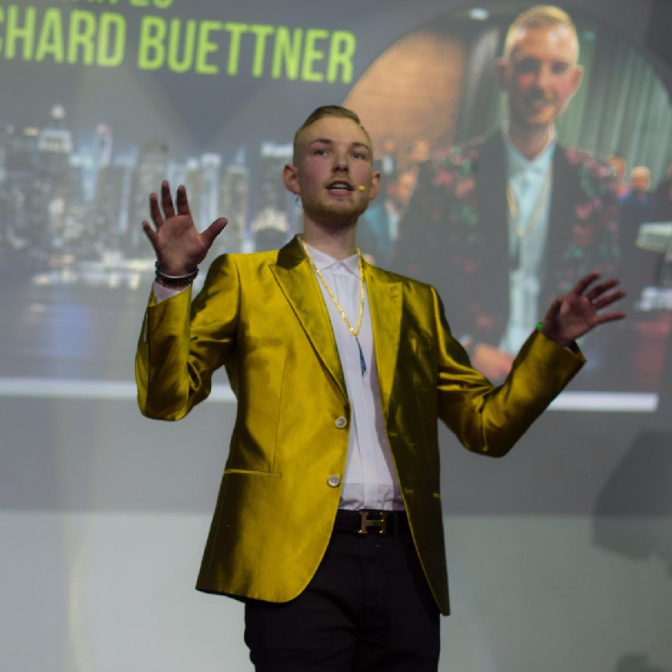
Richard Buettner
"As Grand Master of the Sovereign Order of St. John of Jerusalem Knights of Malta, it has been my mission to uphold our knightly tradition of promoting excellence, decency and altruism throughout the world. Sir Jonathan Amaret is one such individual who exemplifies this tradition with his tireless efforts to improve the lives of others through the school of Thought Mechanics and we are pleased with his induction into our order."

HIRH Prince Basilio Cali
"As Grand Master of the Sovereign Order of St. John of Jerusalem Knights of Malta, it has been my mission to uphold our knightly tradition of promoting excellence, decency and altruism throughout the world. Sir Jonathan Amaret is one such individual who exemplifies this tradition with his tireless efforts to improve the lives of others through the school of Thought Mechanics and we are pleased with his induction into our order."
HRH Princess Francisca Harakawa (Amasu Omawa III)
"In today’s society, there are few scholars whose wisdom transcends age, gender, ethnicity, occupation and status. Sir Jonathan is one such scholar. He has guided me through many challenges over the years and has done the same for many others around the world. He is one of only a handful of people whom I trust and can turn to for guidance, and I am truly grateful to know him as a friend and teacher."
Richard Buettner
"I’m so happy to have met Jonathan at that time when I was €5000 in debt about 2 years and 4 months ago.He helped me clear my mind to focus on what I want, blocking out my doubts and helping my to control my fears.I went on to use these techniques to achieve my first success. Got personally mentored by him right before I hit 6 figures. And continued to follow his guidance and teachings when I broke through to multiple 6 figures because it enabled me to hit a 7 figure income this year and use that knowledge to help hundreds of people to achieve the same level of success. Most importantly Jonathan helped me balance out between the good & bad to get exactly where I wanted to go. Thank you Jonathan for everything that you do for the countless people on this planet."