

How Packaging Distributors Lose $140K Accounts Overnight | By David Marinac
Blog Post: The Three Phone Calls That Kill Packaging Distribution Businesses (And How to Survive Them)
When 17 Years of Relationship Building Vanishes Overnight
I know a packaging distributor, great guy, dedicated professional. He called on the same account for 17 years. Golfed with the plant manager. Their kids attended the same school. They sat three rows apart in church on Sundays.
When that buyer needed anything, a machine, material, or problem solved, the distributor got the call every single time.
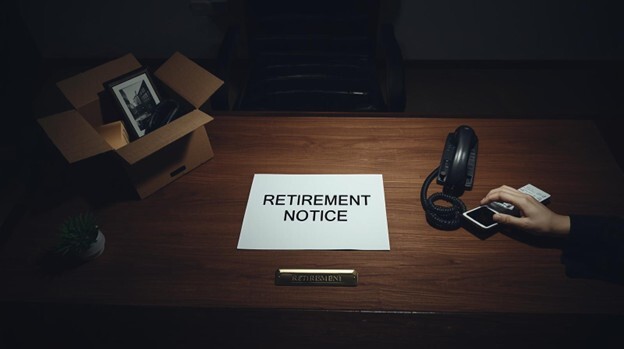
Then one Friday, his guy cleaned out his desk and retired.
Monday morning, a new plant manager walked in with a mandate: review all vendor relationships.
Six weeks later, the distributor was gone. $140,000 in annual revenue gone.
Not because of price. Not because of service. Not because he did a single thing wrong.
Because the only thing holding that account in place was a person. And that person left.
The Three Phone Calls That End Everything
If you're a packaging distributor or a manufacturer who depends on distributors to sell your products, what I'm about to share should keep you up at night. There are three phone calls that end everything, and I've watched every single one play out over my 35 years in this industry.
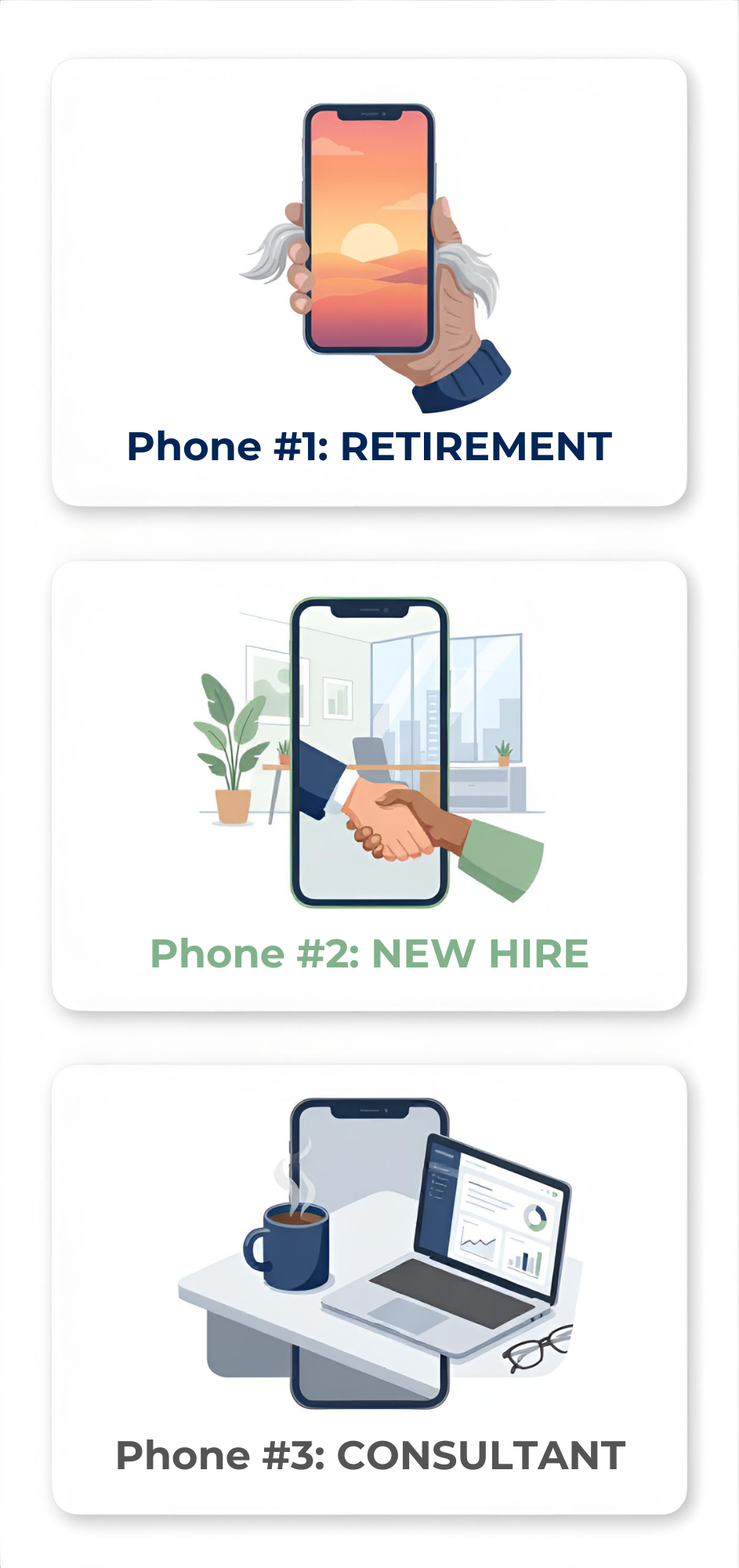
Phone Call #1: The Retirement
You contact the one you've built a relationship with for 15 years retires, gets promoted out of purchasing, or takes a job somewhere else. Overnight, the person who made you the go-to supplier is gone.
Their replacement doesn't know you, doesn't owe you anything, and doesn't care that you were at the Christmas party in 2019. They've got their own contacts, their own preferences, or worse they've been told to review all vendor relationships as part of their onboarding.
You just went from trusted partner to line item under review.
Phone Call #2: The New Hire
The company brings in a new VP of Operations or Director of Procurement, someone from outside, hired specifically to shake things up and find efficiencies.
This person has zero loyalty to existing relationships. In fact, their entire mandate is to question those relationships. They want to make a name for themselves and show the board they were worth the hire.
The fastest way to demonstrate value in a new role? Renegotiate, rebid, or eliminate the vendors the previous person had in place.
You're not a trusted partner to this person. You're a target.
Phone Call #3: The Consultant
This is the one that makes distributors break out in a cold sweat and it should.
The company hires a supply chain consultant. Maybe business is down. Maybe they're preparing for a sale. Maybe a private equity firm wants to optimize costs.
Whatever the reason, a consultant walks in with a spreadsheet, zero emotional attachment to any existing relationship, and one job only: find cost savings.
The distributor is the single most obvious target on that spreadsheet.
The consultant doesn't care about golf games, doesn't care about the 15-year relationship, doesn't care that you've always been there on time and on budget. They care about the margin between what the manufacturer charges and what the end user pays.
And the distributor is sitting right in the middle of that margin, looking very expensive and very replaceable.
But There's a Fourth Call And It Changes Everything
On February 27, 2025, during a call with Midwest Packaging Distributor, a branch manager named Chad said something that revealed what distributor leadership has been desperately searching for:
"I'm trying to find you guys a project that we can win. I want to win."
Not a new product line to add to the catalog. Not another supplier relationship. Not lower pricing on corrugated.
A program. A project. Something they could own and win with.
That single sentence exposed the hidden reality inside every packaging distributor today: there are two completely different conversations happening at the same time.
The Two-Layer Reality Inside Every Distributor
THE REP LAYER:
"Just get me pricing and availability"
Competitive pricing. Reliable supply. Samples to show.
Fear of looking incompetent or losing control of accounts
THE LEADERSHIP LAYER:
"Find me something we can build a program around"
New revenue vertical. Differentiation. Market leadership.
Fear of falling behind, losing relevance, commodity death spiral
The critical insight: We've been pitching to the rep layer. We need to sell to the leadership layer.
But here's the key: the program only works when reps can execute it.
That's why the solution isn't choosing between the two layers, building something that serves both simultaneously.
What Distributor Leadership Actually Wants (But Can't Articulate)
Chad's request "find me a project we can win" is being echoed in distributor leadership meetings across the country right now. But they don't know how to build it themselves.
Why? Because their salespeople are order takers, not program builders.
The packaging distribution industry is in its third consecutive year of contraction. Historic capacity pullbacks. Mill closures. Analyst forecasts of 1-1.5% growth. Distributors are desperately adding non-packaging products janitorial supplies, safety equipment, food service items just to survive.
That's not a growth strategy. That's a desperation move.
Meanwhile, distributor leadership is tasking people like Chad with finding one niche they can own something specialized, defensible, and profitable. Something that can't be commoditized by the next consultant with a spreadsheet.
But here's the problem: their reps don't know how to sell that way.
Why Traditional Distributor Sales Training Fails
Packaging distributor reps are trained in catalog selling:
Lead with price and product specs
Visit customers and hope they need something
Ask "what are you buying?" and "who's your supplier?"
Compete on price against other distributors
Win on pennies. Lose on pennies.
Result: Every product becomes another commodity SKU. The rep is interchangeable. The relationship survives only as long as the contact stays in their seat.
What distributor leadership needs is pain selling:
Lead with the customer's pain and the cost of NOT solving it
Arrive already knowing their pain, ask questions that prove it
Ask "what's your containment process and how many kills per shift?"
Compete on solution nobody else is even in the conversation
Win on value. Customers can't leave because you solved what nobody else saw.
Result: The product becomes the door-opener that pulls the entire catalog behind it. The relationship survives personnel changes because it's built on value, not friendship.
Same rep. Same product. Same customer. Completely different outcome.
The only variable is how the conversation opens.
The Solution: The Win Program
A Win Program is a turnkey, pain-mapped, supplier-vetted, market-validated specialized packaging program delivered to a distributor so their reps can sell it immediately.
What a Win Program Is vs. What It Is Not
A WIN PROGRAM IS:
A revenue-generating product line they OWN
Private-labeled under THEIR brand
Built around a SPECIFIC pain in a SPECIFIC market
Equipped with pricing, samples, discovery scripts, and prospect intelligence
Expandable into adjacent products once established
Backed by AI-driven market intelligence that finds buyers
A WIN PROGRAM IS NOT:
A consulting engagement
An outsourced department they have to explain
A generic "specialty packaging" pitch
A price list and "good luck"
A one-time transaction
A ZoomInfo list and cold calling
Chad didn't ask for a department. He said: "How do we do it?"
That's the question the Win Program answers.
The Eight Components of Every Win Program
Every Win Program is built from the same eight components. This is the framework that makes it repeatable, sellable, and scalable.
Component 1: The Pain Map
Before a single price is quoted, the pain must be mapped. Not "what products do they buy?" but "what operational problem is costing them money, time, or safety?"
Example: The Bung Bag Program
Pain: Kill plants using multi-step bag/twist/tie process for bung containment. Slow. Contamination risk.
Severity: Beef industry in year 4 of 6-year drought-driven downtrend. Hemorrhaging money. Survival mode.
Pain Owner: Plant managers see the operational advantage. Procurement just cuts the PO after.
Context: Beef and pork processing. 900-20,000+ kills/day. Bung is a contaminant. Must be contained in seconds.
Solution: Drawstring bung bag with integrated clip. 2.5x faster. One-hand operation. No competitor offers this exact solution.
Component 2: The Anchor Product
Every Win Program starts with one anchor product that proves the concept. This is the beachhead, the first sale that creates momentum and credibility inside the distributor.
Anchor Product Requirements:
Solves a specific, documented pain (not a generic commodity)
Can be private labeled under the distributor's brand
Has competitive pricing that a rep can sell against existing alternatives
Has a clear "holy sh*t" moment when a prospect sees it for the first time
Opens the door to adjacent products and deeper account penetration
Component 3: The Supplier Engine
The distributor does not source the product. We do.
This removes the single biggest barrier that prevents distributors from entering specialized markets: they don't know where to get the stuff.
What We Handle:
Factory identification, vetting, and qualification (overseas and domestic)
Sample production and trial management
Pricing negotiation leveraging full program volume
Ongoing quality control and supply chain coordination
Specification refinement based on field feedback from reps
The distributor's reps stay in their lane: selling, discovering customer pain, and closing.
Component 4: The Market Intelligence Layer
This is the capability that no packaging distributor has, no competitor offers, and no internal marketing team can replicate.
This is where AI and business intelligence transform a product into a program.
What the Intelligence Layer Delivers:
Prospect Identification: AI-driven identification of companies with the exact pain the Win Program solves
Decision-Maker Targeting: Identifying the plant manager, operations VP, or procurement lead who owns the pain
Pre-Qualification: AI agents that educate prospects and qualify their pain before a rep ever makes contact
AI Search Dominance: Positioning the distributor to dominate AI-driven search (ChatGPT, Perplexity) for the Win Program's niche
Content & Case Studies: Industry-specific content that attracts and educates prospects
When a plant manager downloads a case study about a meatpacking company that increased throughput 2.5x using a product supplied by such and such Packaging, that plant manager calls them.
That's the intelligence layer at work.
Component 5: The Rep Toolkit
A Win Program only succeeds if the reps can sell it. The toolkit removes every excuse for inaction.
Toolkit Contents:
Discovery Script: Specific questions to uncover pain
Pain-to-Pitch Translation: For each pain described, the exact language and data to position the solution
Competitive Positioning: What competitors offer, where they fall short, specific language to use against them
Sample Kit: Physical samples packaged and ready for field demonstrations
Pricing & Lead Time Sheet: Pre-negotiated pricing tiers so reps can quote on the spot
Warm Lead Pipeline: Prospects already identified, educated, and pre-qualified
Component 6: The Rep Transformation (The Game-Changer)
This is the component that determines whether a Win Program lives or dies.
The Supplier Mandate:
We are not offering training as a service. We are not asking permission to coach their reps.
We are the supplier of this specialized product, we sourced it, we vetted it, we control the factory relationship.
And as the supplier, we require that reps selling our product are trained on how to sell it properly.
This is not unusual. Cryovac doesn't hand bone guard film to a distributor and say, "good luck." They deploy technical reps, application engineers, and field support.
Every sophisticated manufacturer requires seller competency on specialized products.
The difference here: we're not training reps on product specs we're training them on the selling methodology.
Because the product is simple. The conversation that sells it is not.
This reframes training from something distributors resist ("you're telling us our people can't sell") into something they expect from a serious supplier ("of course you'd train our people—this is specialized").
The authority comes from the product, not from us claiming to know more than their reps.
What the Supplier-Required Training Covers:
Pain Discovery Training: Specific Questions for the Win Program's market
Pain-to-Pitch Translation: For every answer a prospect gives, the rep has a mapped response
The "Discover Before You Quote" Discipline: Gather pain intelligence BEFORE revealing pricing
Selling to the Pain Owner, Not Procurement: Redirect to the person whose job depends on solving the problem
Field Intelligence Feedback Loop: Every customer conversation generates data that feeds the program
Component 7: The Expansion Path
Every Win Program is a wedge. The anchor product gets in the door. The expansion path builds business.
The Bung Bag Expansion Example:
Anchor: Drawstring bung bags for beef processing
Adjacent: Smaller bung bags for pork processing
Vertical expansion: Cryovac-competitive bone guard alternative
Category expansion: Shrink bags, thermoforming films, direct-contact food packaging
Market leadership: Aseptic packaging, bag-in-box, spouted pouches, hot fill solutions
Chad said it himself: "This gives us an entry into the food packaging game. It opens up a completely new segment for our company to invest in."
The bung bag is the door opener. The program is what walks through it.
Component 8: The Revenue Model
The Win Program generates revenue for everyone in the chain.
The Distributor:
Sells products at margin. Owns customer relationship. Private-label brand equity.
High-margin specialized sales replacing commodity transactions. 25-35%+ margins vs. 8-12% on tape and stretch.
The Reps:
Warm leads, pre-qualified prospects, sticky products that don't get price shopped.
Higher commissions. Accounts that can't be poached. Career differentiation.
SPM (Us):
Supplier margin on product. Program build fee. Ongoing intelligence subscription.
Recurring revenue per distributor. Scales with each new Win Program and distributor.
Why This Survives the Three Phone Calls
Remember those three phone calls that end everything? Here's why a Win Program survives them:
Phone Call #1 (The Retirement): The relationship isn't built on one person it's built on solving a documented operational pain. The new plant manager inherits the same problem. The solution is already proven.
Phone Call #2 (The New Hire): The new VP can't eliminate a program that's demonstrably saving money and improving operations. They might try to renegotiate, but they can't replace it because nobody else offers this exact solution.
Phone Call #3 (The Consultant): The consultant's spreadsheet shows margin, but it also shows value. When the Win Program is solving a $200K operational problem and generating $140K in revenue, the math works in the distributor's favor.
The Win Program survives because it's not built on access it's built on value.
The Uncomfortable Truth About Your Current Strategy
Let me ask you directly:
If you're a packaging distributor: What are you building that outlasts your next phone call? When your best contact retires Monday morning, what value remains?
If you're a packaging manufacturer depending on distributors: What happens to your revenue when your distributor's best relationship ends? Can a buyer find you without going through someone else?
The golf courses and the church pews aren't going anywhere.
But the business model built entirely on top of them? That clock is running, and it's not slowing down.
What Happens Next
The packaging distribution industry is at an inflection point. The old model built on relationships, access, and catalog selling is dying.
The new model is being built right now by the distributors who understand this shift.
Chad said: "I'm trying to find you guys a project that we can win. I want to win."
That's not just one branch manager's mandate. That's the entire industry searching for the same answer.
The Win Program is that answer.
It's pain mapped. Supplier-vetted. Market-validated. Rep-equipped. Intelligence-powered.
It arrives fully built. The distributor's only job is to say yes, enforce the process, and let their reps sell.
Take Action Now
If you're a distributor leader like Chad, someone tasked with finding a program your company can win with—let's talk. I'll show you exactly how a Win Program works and how it can be built for your market.
If you're a packaging manufacturer watching your distributor relationships erode with every personnel change, let's talk about building direct authority and findability that survives when the relationship doesn't.
If you're a rep who's tired of competing on price and watching your best accounts disappear when your contact leaves, let's talk about how pain selling changes everything.
Leave a comment below and tell me: Which of the three phone calls have you lived through? The retirement, the new hire, or the consultant?
And if this resonated with you, share this article with somebody in your network who needs to hear it.
The business model is changing. The question is: will you change with it, or will you wait for the phone to ring?
About the Author: David Marinac has spent 35 years in the packaging industry, building the Specialized Packaging Marketplace to help manufacturers and distributors build authority, findability, and programs that survive personnel changes and consultant reviews.
Ready to build your Win Program? Contact us here
The clock is ticking. The phone will ring. What will you have built when it does?

Want to discuss
custom packaging?
Want to create your own Specialized packaging Department?

But Don't take it from me take it from my students

HRH Princess Francisca Harakawa (Amasu Omawa III)
"In today’s society, there are few scholars whose wisdom transcends age, gender, ethnicity, occupation and status. Sir Jonathan is one such scholar. He has guided me through many challenges over the years and has done the same for many others around the world. He is one of only a handful of people whom I trust and can turn to for guidance, and I am truly grateful to know him as a friend and teacher."
Richard Buettner
"As Grand Master of the Sovereign Order of St. John of Jerusalem Knights of Malta, it has been my mission to uphold our knightly tradition of promoting excellence, decency and altruism throughout the world. Sir Jonathan Amaret is one such individual who exemplifies this tradition with his tireless efforts to improve the lives of others through the school of Thought Mechanics and we are pleased with his induction into our order."
HIRH Prince Basilio Cali
"As Grand Master of the Sovereign Order of St. John of Jerusalem Knights of Malta, it has been my mission to uphold our knightly tradition of promoting excellence, decency and altruism throughout the world. Sir Jonathan Amaret is one such individual who exemplifies this tradition with his tireless efforts to improve the lives of others through the school of Thought Mechanics and we are pleased with his induction into our order."
HRH Princess Francisca Harakawa (Amasu Omawa III)
"In today’s society, there are few scholars whose wisdom transcends age, gender, ethnicity, occupation and status. Sir Jonathan is one such scholar. He has guided me through many challenges over the years and has done the same for many others around the world. He is one of only a handful of people whom I trust and can turn to for guidance, and I am truly grateful to know him as a friend and teacher."
Richard Buettner
"I’m so happy to have met Jonathan at that time when I was €5000 in debt about 2 years and 4 months ago.He helped me clear my mind to focus on what I want, blocking out my doubts and helping my to control my fears.I went on to use these techniques to achieve my first success. Got personally mentored by him right before I hit 6 figures. And continued to follow his guidance and teachings when I broke through to multiple 6 figures because it enabled me to hit a 7 figure income this year and use that knowledge to help hundreds of people to achieve the same level of success. Most importantly Jonathan helped me balance out between the good & bad to get exactly where I wanted to go. Thank you Jonathan for everything that you do for the countless people on this planet."